

Random games to decide anything fairly: a full guide
For two options, flip a coin; for a group, spin a random name picker; for raffles, draw numbers with no repeats. The key is agreeing on the rules before the draw and sticking to the result.
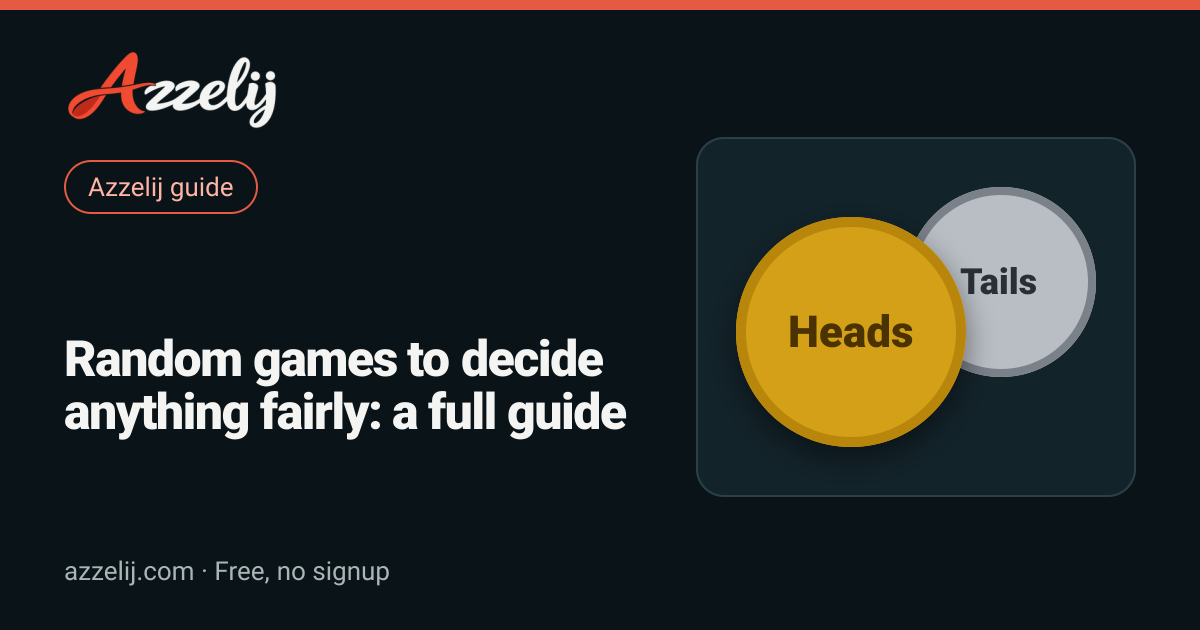
Who pays for dinner? Which team goes first? Who wins the giveaway on your stream? Most small arguments end the same way: you let chance decide. That isn't lazy. It's one of the oldest and most practical ways to split something when nobody has a better claim than anyone else. In this guide you'll find which method fits each situation, how these tools work under the hood, a little painless math, and how to run a draw nobody can complain about.
Every tool we mention runs in your browser: you can flip a coin, play rock paper scissors, spin a random name picker, use a dice roller or get a random number without installing anything or creating an account.
Why random choice feels fair
When two people want the same thing, any rule you pick favors someone: the oldest, whoever got there first, whoever argues loudest. Chance is the only judge with no favorites. If every option has exactly the same probability, nobody can say the decision was rigged, and that takes a lot of heat out of the moment.
There's another nice side effect: chance takes the burden of choosing off your shoulders. If the coin says you're doing the dishes tonight, your brother didn't win the argument, it just landed that way. That's why coin tosses, dice and drawing straws have been used for centuries in games, sports and group decisions.
The golden rule: agree before the draw
Random choice only feels fair if everyone accepted the rules before seeing the result. Decide what each outcome means, how many rounds there will be and what happens on a tie. If someone asks for a redo because they didn't like the outcome, it's not chance anymore, it's negotiation in disguise. A good habit is to say the rules out loud or type them in the group chat right before you play.
A trick to find out what you really want
Sometimes you flip the coin and, while it's in the air, you notice you're hoping for one side. That gut feeling is useful information. If the result disappoints you, maybe you already knew what you wanted. Using chance to get unstuck on a personal choice is fine, but for truly important things like health, money or work, take your time and talk it through with someone you trust.
Flip a coin: the king of two options
A coin toss is perfect when there are exactly two paths: pizza or burgers, home or away, who serves first. Each side has a 1 in 2 chance, or 50%. It's lightning fast and everyone understands the rules without explanation.
A physical coin has small details that can nudge the result: how it's tossed, whether it's caught or allowed to bounce, whether someone saw which side was up at the start. That's why plenty of people prefer an online coin flip, where the result doesn't depend on anyone's technique and everybody sees the same screen at the same time.
- Use it for: choosing between two places, who starts a match, who picks the movie.
- Avoid it for: groups of three or more. Chained coin flips work, but they get slow and someone ends up flipping more often than everyone else.
- Bonus tip: whoever calls heads or tails should call it before the toss, never while the coin is in the air.
Rock paper scissors: rules and best-of series
The rules are famous: rock crushes scissors, scissors cut paper and paper covers rock. If both players throw the same thing, it's a tie and you go again. Each player has a 1 in 3 chance to win, 1 in 3 to lose and 1 in 3 to tie every round, as long as the opponent picks at random.
Here's the catch: humans are bad at being random. Many people repeat the move that just won or switch after a loss, and a sharp opponent can take advantage of that. If you want the game to be pure luck, play rock paper scissors online, where the computer picks with a random generator and has no habits.
Best of 3 or best of 5
Best of 3 means the first to two wins takes it; best of 5, the first to three. Ties don't count, so you replay until someone wins the round. Series make the result feel more earned and add a bit of drama. Our version lets you pick a free game, best of 3 or best of 5.
Random name picker for groups, classrooms and giveaways
Once there are more than two options, a coin falls short. A name wheel lets you type a list, one option per line, and spin to pick one at random. It works with people's names, but also with dishes, movies, dares or household chores.
- In class: picking who comes to the board or who presents first, without looking like the teacher has favorites.
- With friends: deciding where to go, which board game to play or who controls the music in the car.
- On streams and social media: picking a winner from the list of entries.
- At work: assigning shifts or deciding the order of a meeting.
A handy detail: turn on the option to remove the winner from the list if you're drawing several turns in a row. That way nobody comes up twice and you can build a full order, say for class presentations. And if the draw splits people into teams, give them a name with our clan name generator; our guide to clan names has ideas to make them sound epic.
Does every name get the same chance?
Yes, as long as each name appears only once. With five names, each one has a 1 in 5 chance, or 20%. If someone shows up twice, their odds double. Before you spin, check for duplicates and stray blank lines, especially if you pasted the names from a chat or a comment section.
Dice roller: board games, RPGs and d6 or d20 notation
Dice are the randomness engine of board games. A standard six-sided die gives a number from 1 to 6, each with a 1 in 6 chance. If you lost the dice from your Monopoly box, you can use an online dice roller on your phone and keep playing.
How to read dice notation
Tabletop role-playing games write how many dice you roll and how many sides they have. 1d20 means one twenty-sided die; 2d6 means two six-sided dice added together; 3d8 means three eight-sided dice. The most common dice are d4, d6, d8, d10, d12, d20 and d100, and our tool includes all of them.
Something that surprises a lot of people: with two dice, not every total shows up equally often. Seven is the most common because it can be made six ways (1+6, 2+5, 3+4, 4+3, 5+2, 6+1), so it appears in 6 out of 36 rolls, or 1 in 6. Two and twelve can each be made only one way: 1 in 36. That's why so many games give seven special rules.
- 1d2 or a coin: yes or no decisions.
- 1d6: classic board games and quick challenges.
- 2d6: games where the total matters, like the famous seven.
- 1d20: attack or skill checks in role-playing games.
- 1d100: percentages, event tables or random encounters.
Random numbers for raffles without repeats
If you sold numbered tickets for a school raffle or have a numbered list of entrants, the clearest option is a random number generator. Set the minimum, the maximum and how many numbers you want, and tick the no-repeats option if you're drawing several winners.
Why does no repeats matter? If you're giving away three prizes among 100 tickets and the generator allows duplicates, the same number could come up twice and you'd have to redraw, which makes people suspicious. With no repeats, the tool shuffles the whole range and takes the first results, just like pulling slips out of a hat without putting them back.
Typical settings
That last one is good for fun games, like picking a random date and then checking what makes it special on our days of the year list.
The math of chance, made simple
Comparison table: which method to use
| Method | Options | Chance of each | Best for |
|---|---|---|---|
| Coin flip | 2 | 1/2 (50%) | Quick decisions between two people or two plans |
| Rock paper scissors | 3 moves | 1/3 win, 1/3 lose, 1/3 tie | Head-to-head duels, best of 3 or 5 |
| Name picker wheel | As many as you type | 1/n (n = number of names) | Groups, classrooms, social media giveaways |
| Six-sided die | 6 | 1/6 (about 16.7%) | Board games, challenges, turn order |
| Twenty-sided die | 20 | 1/20 (5%) | Role-playing games |
| Random number | Whatever range you set | 1 / size of the range | Numbered-ticket raffles, multiple winners |
- 2Two optionsFlip a coin: one tap and done.
- 1 vs 1DuelRock paper scissors, best of 3.
- 3+GroupName wheel with one option per line.
- d6Board gameDice from 4 to 100 sides, total included.
- #RaffleRandom numbers with no repeats.
- ♥Date nightSpin the plan from our date ideas.
How to work out a probability
The probability of something is just the number of outcomes that work for you divided by the total number of outcomes. A coin has two sides and you want one: 1/2. A die has six faces and you want a 4: 1/6. A wheel with eight friends and you're one of them: 1/8.
Every roll is independent
A coin has no memory. If it landed heads five times in a row (which happens about 1 in 32 times), the next flip is still 50/50. Believing tails is due is called the gambler's fallacy, and it's one of the most common mistakes people make. Same with dice: not rolling a 6 in ten tries doesn't bring the next 6 any closer.
What is true is that over a huge number of flips, results tend to even out. Flip a coin a thousand times and you'll usually land somewhere near 500 heads, but that happens because new flips dilute the streaks, not because the coin corrects its mistakes.
Why best of 3 changes things
If the game is pure luck, like a coin flip, best of 3 changes nothing: each side still has 50%. But if one player has even a small edge, a series makes it bigger. Example: if you win each round 60% of the time, you win a single round 60% of the time, but a best of 3 almost 65% of the time, and a best of 5 roughly 68%. That's why tournaments use series: they reward the better player and reduce the weight of one lucky round.
If you want a quick, perfectly even decision, one round is enough. If you want it to feel more epic, or you want the best player to win, play a series.
How randomness works on a web page
Computers follow instructions, so randomness doesn't come naturally to them. Modern browsers include a cryptographic random generator, the same kind used to create security keys. Our random tools use it directly on your device: whatever you type into the name wheel is never sent to a server.
Rejection sampling, without the jargon
The generator hands out numbers from a huge, fixed range. If you want to pick among three people and that range doesn't divide evenly by three, some of them would get a tiny bit more chance. To avoid that, we use rejection sampling: if the number lands in the leftover slice at the end of the range, it's thrown away and a new one is drawn.
Picture it with a ten-sided die and three friends: 1 to 3 means Ana wins, 4 to 6 Ben, 7 to 9 Cara, and on a 10 you simply roll again. Now everyone has exactly the same chance. In practice the difference is microscopic, but we'd rather it be truly fair.
Checklist for a fair online giveaway
If you're giving something away on social media, at your business or at school, trust is worth more than the prize. This list helps make sure nobody can cry foul:
- Publish the rules before you start: what the prize is, who can enter, the date and time of the draw and how you'll contact the winner.
- Build the list of entrants and review it: remove duplicates, fake accounts or anyone who doesn't meet the rules you published.
- Number the list if you're using random numbers, or paste one name per line if you're using the wheel.
- Record your screen or run the draw live, showing the full list before you spin.
- Draw a couple of backup winners in case the first one doesn't reply within the deadline you announced.
- Post the result and keep the recording in case someone asks later.
Ideas for classrooms, parties and date night
In the classroom
- Spin the wheel with the class list to pick who answers, removing each student after their turn.
- Roll a die to choose which exercise or review question comes next.
- Teach probability with real data: have everyone flip a coin 50 times, record the results and compare them with the theoretical 50%.
- As a reward for finishing early, a round of sudoku to train logic.
At parties and get-togethers
- Dare wheel: write funny challenges (sing, do an impression, tell a joke) and let the wheel decide.
- A knockout rock paper scissors tournament with best-of-5 finals.
- Gift exchange order drawn with random numbers, no repeats.
- Dice to decide dance turns or who picks the next song.
Date night: what should we do?
The eternal couple question: what do we do tonight? Grab a few options from our date ideas, put them on the wheel and let chance decide. If you want a fun warm-up before heading out, take the love compatibility test together. It's just for laughs, not a serious prediction.
After the draw
Chance has done its job; what comes next is up to you. If you split people into teams for a tournament, each one needs an identity: a stylish name and a nickname people remember. Check out our guide to creating an original gamer name and let the winning team show off. And if the draw was for something casual, like who buys coffee, take it with good humor: you lost the coin flip today, you'll win the next one.
Tools in this guide
- Flip a coin: heads or tails onlineTap the button and let the coin decide
- Rock paper scissors onlinePick rock, paper or scissors
- Random name picker wheelType the names and spin the wheel
- Online dice rollerPick your dice and roll
- Random number generatorChoose the range and generate
- Date ideas: what should we do tonight?Choose your filters and get an idea
Frequently asked questions
What is the fairest way to decide between two people?
A coin flip, agreeing beforehand which side belongs to whom. Each option has a 50% chance and the result is instant.
Is best of 3 fairer than a single round?
In pure luck games it makes no difference: each side still has 50%. In games where skill matters, a series slightly favors the better player.
How do I run an online draw without repeat winners?
Number the entrants and use the random number generator with no repeats, or use the name picker wheel and remove the winner after each spin.
Do the random tools on this site save my lists?
No. They run in your browser using its cryptographic generator, and whatever you type into the wheel is never sent to a server.
If heads came up five times in a row, is tails more likely next?
No. Every flip is independent and still 50/50. Believing otherwise is known as the gambler's fallacy.
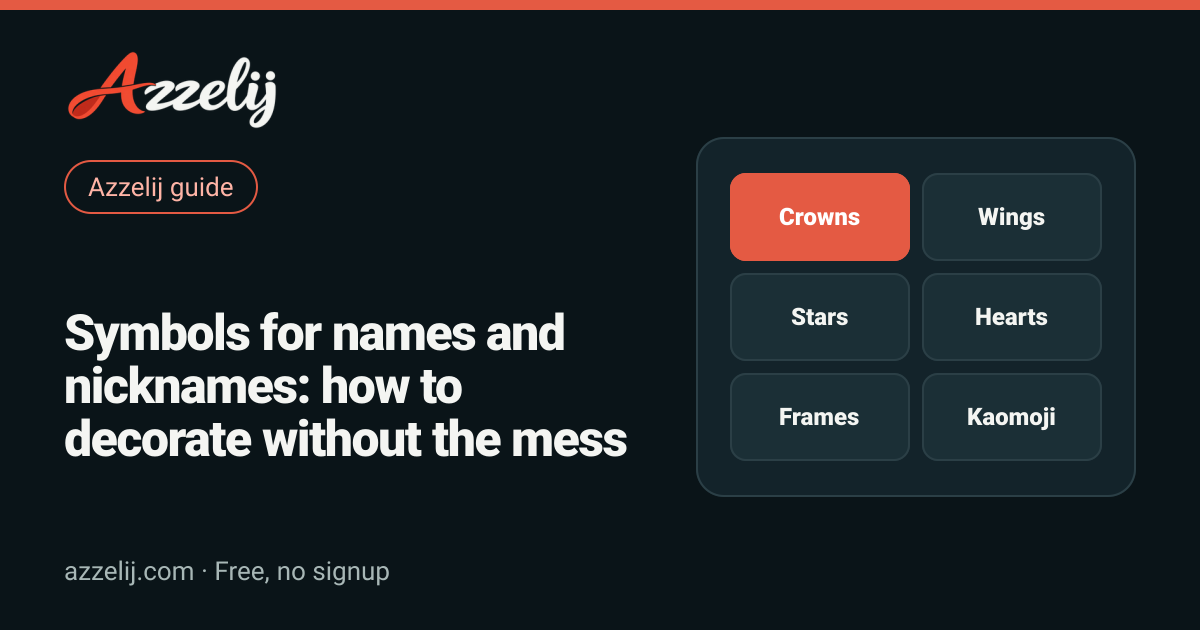 Symbols for names and nicknames: how to decorate without the mess
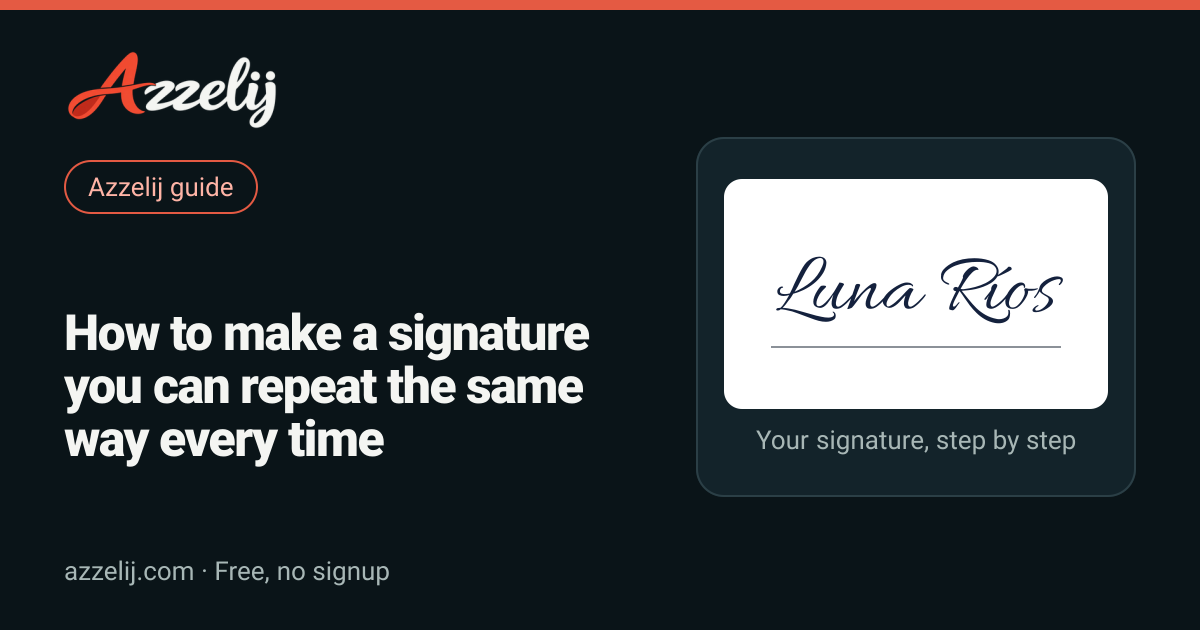 How to make a signature you can repeat the same way every time
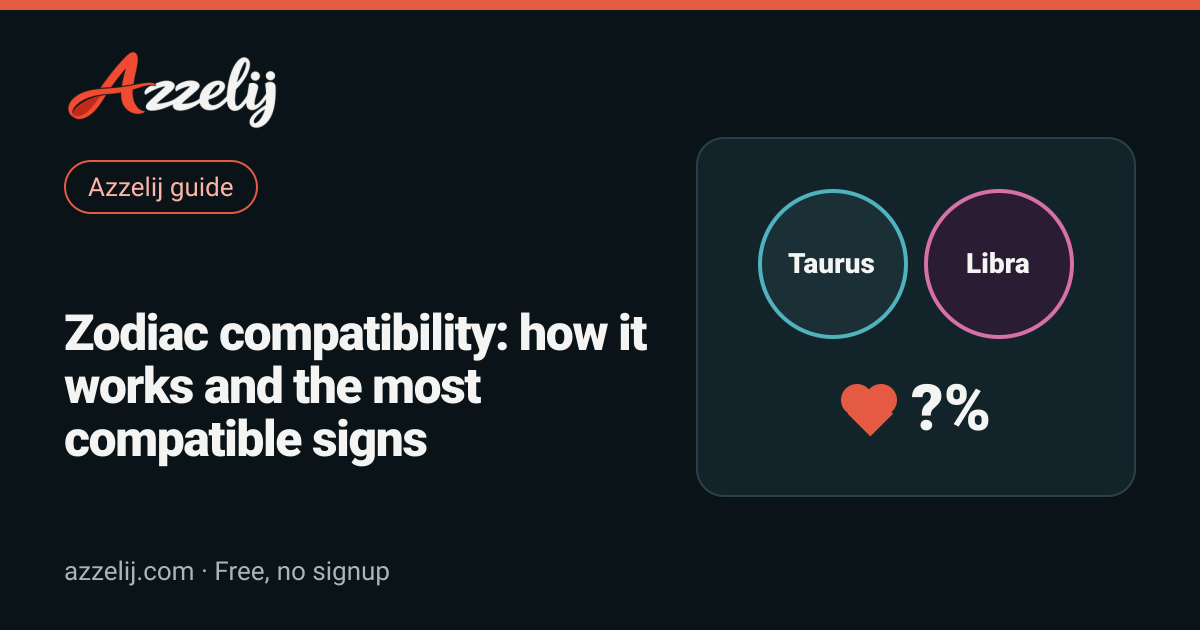 Zodiac compatibility: how it works and the most compatible signs